

Readers aren’t simply searching for books anymore. Increasingly, they’re asking artificial intelligence what to read next.
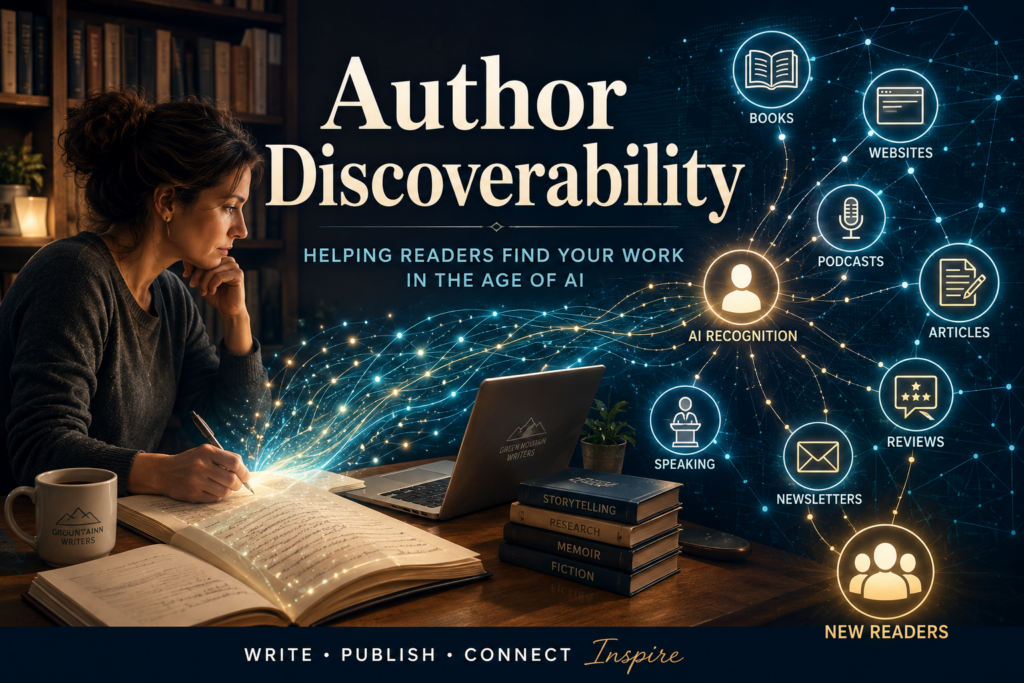
Here’s how independent authors can make sure their work becomes part of the answer.
For years, authors have focused on building websites, growing email lists, posting on social media, and learning the basics of search engine optimization. Those skills are still valuable, but the way readers discover books is changing rapidly.
Instead of typing a few keywords into Google or browsing online bookstores, many readers now ask tools like ChatGPT, Google AI, Gemini, Claude, and Perplexity for recommendations. Rather than receiving a list of websites to explore, they are presented with a direct answer that may include a handful of suggested books or authors.
For independent writers, this shift presents both a challenge and an opportunity. The authors who develop a clear, consistent online presence are far more likely to be discovered by readers than those whose work exists only on a retailer’s website.
Readers Are Asking Different Questions
Imagine a reader searching for guidance after changing careers, looking for historical mysteries set in New England, or hoping to find uplifting poetry about healing and resilience.
Instead of browsing page after page of search results, that reader may simply ask: “What books should I read?”
Artificial intelligence gathers information from many public sources before offering recommendations. It looks for authors who have demonstrated knowledge, consistency, and credibility across the web. That means discoverability is no longer determined by a single website or a clever marketing campaign. It is built through a collection of signals that work together.
Your Online Presence Is Your Author Identity
Think of your online presence as your digital reputation. Your website, author biography, articles, interviews, podcasts, social media profiles, guest posts, reviews, and speaking engagements all contribute to the picture readers and search tools see. The stronger those pieces reinforce one another, the easier it becomes for someone to understand who you are and what you write. One of the most valuable questions every author can answer is surprisingly simple:
What do I want to be known for?
For nonfiction writers, that might be:
- Memoir writing
- Financial literacy
- Gardening
- Leadership
- Local history
- Personal growth
For fiction writers, it could be:
- Cozy mysteries
- Historical fiction
- Appalachian storytelling
- Literary fantasy
- Vermont-inspired fiction
- Character-driven romance
Rather than trying to appeal to everyone, successful authors become recognizable for something specific.
Your Website Is Still Your Home Base
Social media is important, but it is also temporary. Posts disappear into endless feeds, while trends come and go. Your website is different. It serves as your permanent home online, where every article, event, interview, review, award, and book builds a stronger foundation for readers to discover.
A well-organized author website should include:
- A professional biography
- Information about your books
- Articles or blog posts
- Speaking and event information
- Media coverage
- Reviews and testimonials
- Easy ways for readers to connect
Unlike social media, your website continues working for you long after you publish each new piece of content.
Think Beyond Promoting Your Latest Book
Many authors make the mistake of talking only about their newest release. Readers are often looking for something much broader. They want answers to questions, behind-the-scenes stories, research, inspiration, and practical advice.
Consider writing articles that explore:
- The inspiration behind your novel
- Historical research that shaped your story
- Lessons learned while writing your memoir
- Writing techniques you’ve discovered
- Reading recommendations
- Frequently asked questions from readers
Every helpful article becomes another opportunity for someone to discover your work.
Metadata Matters More Than Most Authors Realize
Metadata may sound technical, but it simply refers to the information that describes your book. Your title, subtitle, categories, keywords, book description, and author biography all help online retailers and search tools understand what your book is about. The clearer and more descriptive these elements are, the more likely your work is to appear when readers search for topics that match your expertise or storytelling style. Many authors spend months writing a book but only a few minutes crafting the information that helps readers find it. That deserves much more attention.
Build Authority One Step at a Time
Authority isn’t created overnight. It grows through consistent visibility.
- Every podcast interview…
- Every library presentation…
- Every guest article…
- Every newspaper feature…
- Every five-star review…
- Every book award…
Each one adds another layer to your professional reputation. On its own, any single achievement may seem small. Together, they create a body of work that demonstrates experience, credibility, and commitment to your craft.
Five Ways to Improve Your Discoverability This Month
If you’re wondering where to begin, start with these practical steps:
- Update your author biography so it clearly explains who you are and what you write.
- Identify the one question or topic you want readers to associate with your work.
- Publish a thoughtful article on your website that reflects your expertise or storytelling interests.
- Review your book descriptions, keywords, and categories to ensure they accurately represent your books.
- Ask an AI assistant what it knows about you and your books. The results can reveal gaps in your online presence that are worth strengthening.
The Future Favors Authors Who Stay Visible
Artificial intelligence isn’t replacing authors. It is changing how readers discover them. The writers who consistently share their knowledge, tell compelling stories, participate in their communities, and maintain a strong online presence are building something much larger than a marketing campaign. They are creating a lasting digital reputation.
Whether you publish fiction, nonfiction, poetry, or memoir, discoverability has become an essential part of the writing journey. The good news is that every article you write, every event you attend, every interview you give, and every connection you make contributes to that growing foundation. Great books still matter. Today, making sure readers can find them matters just as much.

Stephen Kastner writes essays, science fiction, memoir, poetry, and is currently working on a screenplay and novel about his Quaker ancestor Thomas Maule, who was arrested for defending the wise women accused of witchcraft in Salem in 1692. He leads the Green Mountain Writers Group in Vermont and creates digital media professionally as DesignWise Studios.
Follow his Antediluvian Attitudes on Substack: https://stephenkastner.substack.com