

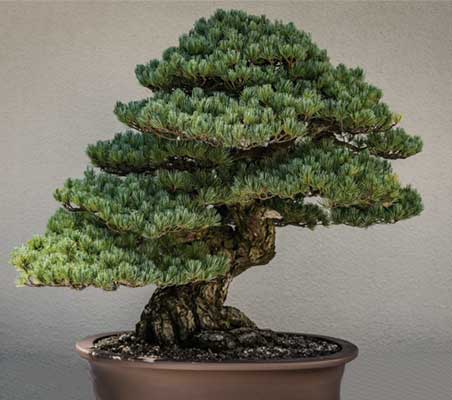
I have a bonsai growing in my bedroom.
It is eleven inches tall, and it may be decades old. I don’t know exactly how old. What I do know is that it does not grow on its own terms. Not entirely.
I water it. I turn it toward the light. I prune it. I decide which branches remain and which are cut away. Left alone, it would become something else entirely. What it is now exists somewhere between its own nature and my intervention.
- It is not artificial.
- It is not untouched.
- It is shaped.
- That is how I work.
On Monday, March 9, at 10 AM, I attended a Green Mountain Writers Group online poetry session led by Haitian poet Jerrice J. Baptiste. At one point, she gave us a simple prompt: It takes faith. We had ten minutes. No overthinking. No polishing. Just write.
What came through me in that short window was not finished, not refined, but alive. A seed pulled from somewhere I recognized but couldn’t fully name. It carried effort. Doubt. A kind of quiet persistence.
The Work of Faith

It cannot be considered effortless.
Faith requires focus.
It often blurs
beneath waves of information.

Thoughts flow in and out
upon clouds of opinion,
anger, fear, and doubt.

But faith takes work.
Like building a fire,
your breath upon a spark of intention.

You must raise a flame
and nurture it alone,
despite the cold indifferent tones
of critics and popular convention.

It takes faith to be yourself.
After writing and refining the poem, I placed it into Suno, a system that generates music and it produced four songs. I didn’t like any of them. It was a guy playing a guitar, singing like folk music. I changed the setting to a female voice and experimented by adding some styles; 808 drums, dubstep, techno. I kept polishing the results and ended up with ten song variations. Ten possible emotional landscapes built from the same words. I listened carefully and chose the best two.
I brought the poem into a conversation with Solan, my ChatGPT agent and asked it to translate the language into a set of structured visual prompts that I could use in Sora, an AI video generator. Together, we developed a dozen separate scenes in a storyboard. Not perfect, I had to correct and fine tune the prompts for continuity. I had to make sure winter remained winter, and that the emotional arc held from scene to scene. But the structure emerged through that exchange.
Sora generated eleven short video clips based on those prompts. What it gave me were not finished scenes, but fragments. Raw visual material. I had to continually refine the prompts to finalize an acceptable collection of clips.
I took those fragments into Adobe Premiere and began to assemble them. Once again, the work became mine in a different way. Timing. Pacing. Silence. Adjusting the scale, zoom, duration, and levels of each clip. These decisions cannot be automated.
At every stage, something grew and had to be shaped.
There is an emerging movement that seeks to label work as “AI-free,” as if the presence of new tools diminishes the legitimacy of what is created. As if using them somehow removes the human from the process. I’m not denying the existence of AI slop. When cameras first became widely available, we suddenly got piles of bad snapshots and it took years before photography was accepted as an art form. Rap emerged from street corners and block parties in the 1970s Bronx, opening doors for raw, lyrical poets like Rakim, Nas, and Tupac who elevated it beyond novelty rhymes into profound storytelling and social commentary.
I understand the concern.
These new tools do have sharp edges.
But refusing them entirely feels to me like insisting a house be built only with hand tools. It is not a defense of craft. It is a rejection of evolution.
The question is not about which tools are used.
The question is whether a human being remains present in the act of creation.
- I did not disappear from this process.
- I initiated it.
- I selected.
- I corrected.
- I held continuity.
- I finished it.
Working with these systems does not feel like surrendering authorship. It feels like tending that bonsai.
The growth was not entirely mine.
But the resulting form certainly is.